Cedar Creek Confectionery brand mark, established 1948

Studio dossier · Heartland · 1948

Handmade artisanal candies, and the childhood flavors they hold

Cedar Creek Confectionery is a fourth-generation candy studio on the Ohio River, and this dossier is its open ledger: every small-batch confection we still cook in copper, pull on a brass hook, or cut by hand in Marietta, documented with the exact cook point, texture and presentation format behind it.


If you remember root beer barrels from a drugstore counter, a peppermint stick snapped into a paper cone, or a caramel that pulled the filling out of a tooth, you already know the register we work in. The flavors of an American childhood are not complicated — cane sugar, cultured butter, molasses, wintergreen, real lemon oil, Virginia peanuts — but they are unforgiving. Cook them two degrees too far and the memory sours.

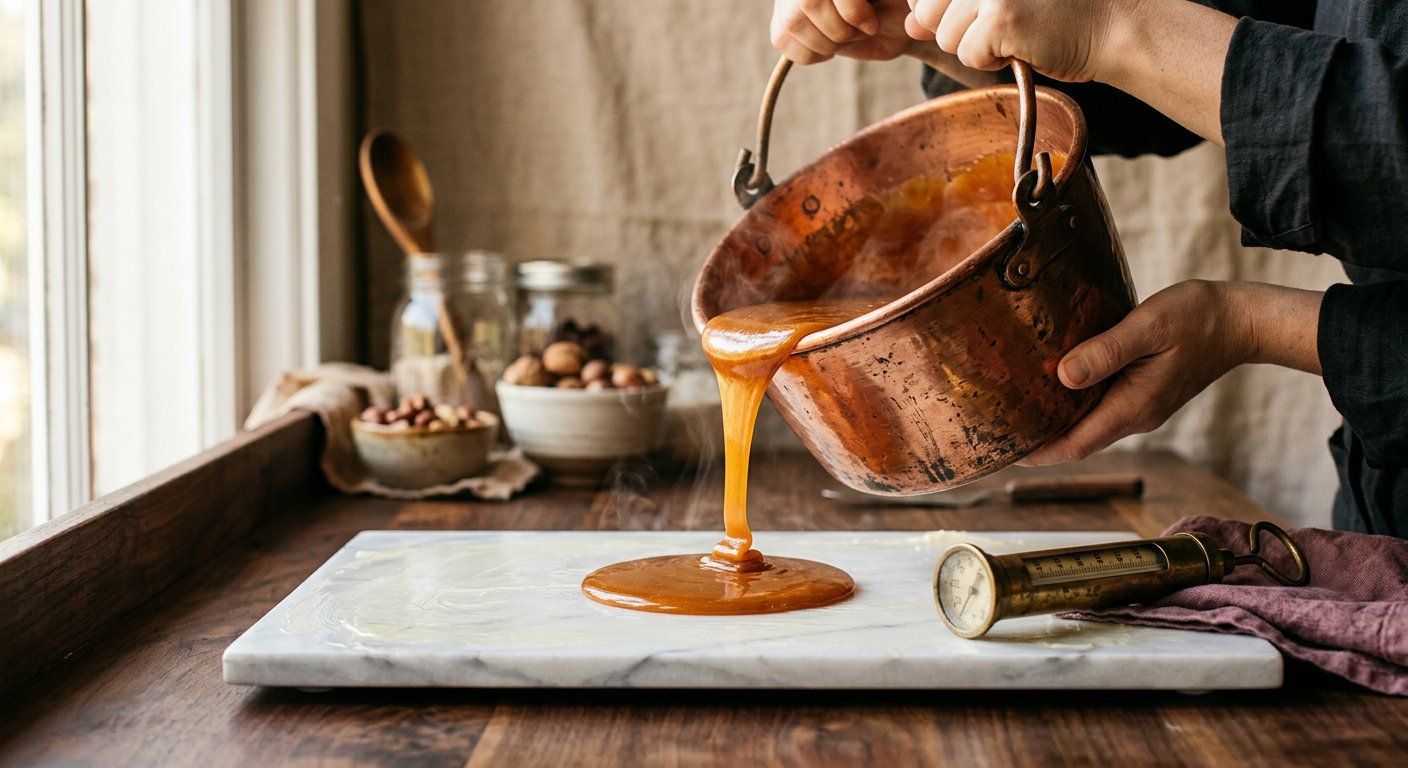
Handmade caramel pouring from a copper kettle onto a buttered marble slab
Plate 01 — The kettle room, Front Street Caramel at 245°F, poured on buttered marble
01 / Manifesto

Why the archive matters more than the assortment

A specialist directory, not a marketplace: three commitments that govern every entry you will read here, from the sugar we buy to the way a box is closed.

Heritage recipes, written down

Every formula in the archive is transcribed from a 1948 ledger kept by the founding family, including the marginal notes about humidity, cold snaps and the year the wintergreen oil arrived late. We publish the cook points instead of guarding them.

Small-batch by physical limit

A forty-pound batch is not a marketing figure; it is what a thirty-quart copper kettle will hold before the sugar scorches at the rim. Scaling past it changes the candy, so the kettle sets the ceiling and the ceiling sets the schedule.

Tactile, not decorative

Nothing here is finished with an edible print or a compound coating. Wax paper, craft board and grosgrain ribbon are the whole vocabulary, because the object a buyer remembers is the candy itself, not the packaging around it.

02 / Studio plates

Six collections photographed in the studio

Scroll the plate rail horizontally to move through the collections. Each plate records the family, the texture and the format we present it in.

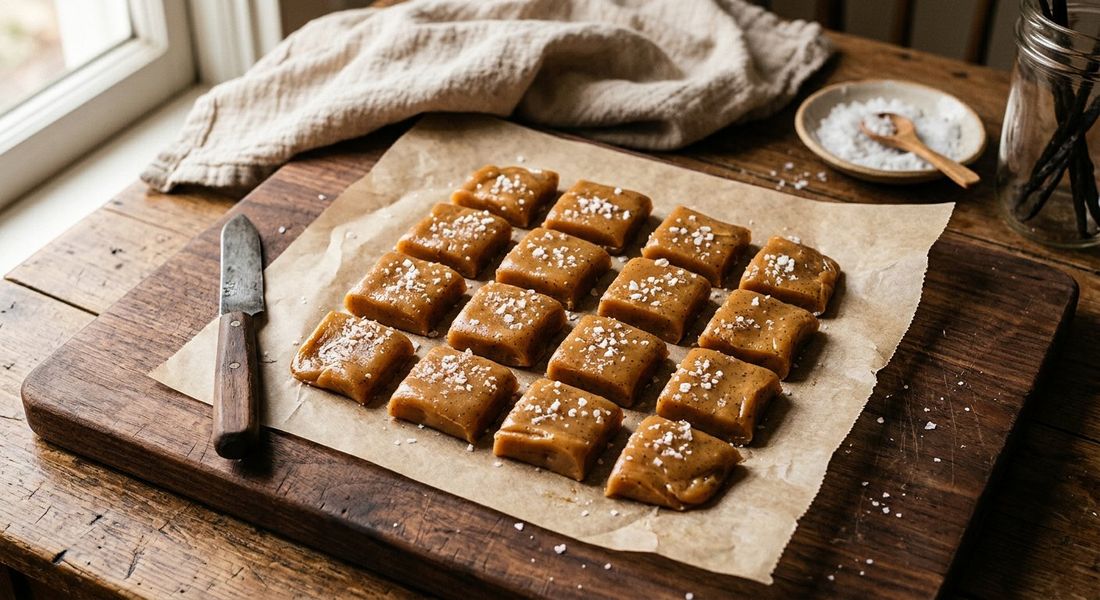
Hand-cut cream caramels dusted with flake salt on parchment paper
Plate 02 · Chewy · Copper kettle

Copper Kettle Cream Caramels

Cultured butter, Ohio cream and cane sugar cooked to a firm ball, cured overnight, then cut into thumb-thick squares and finished with flake salt.

245°F cook · 48-hour cure · Wax paper twist

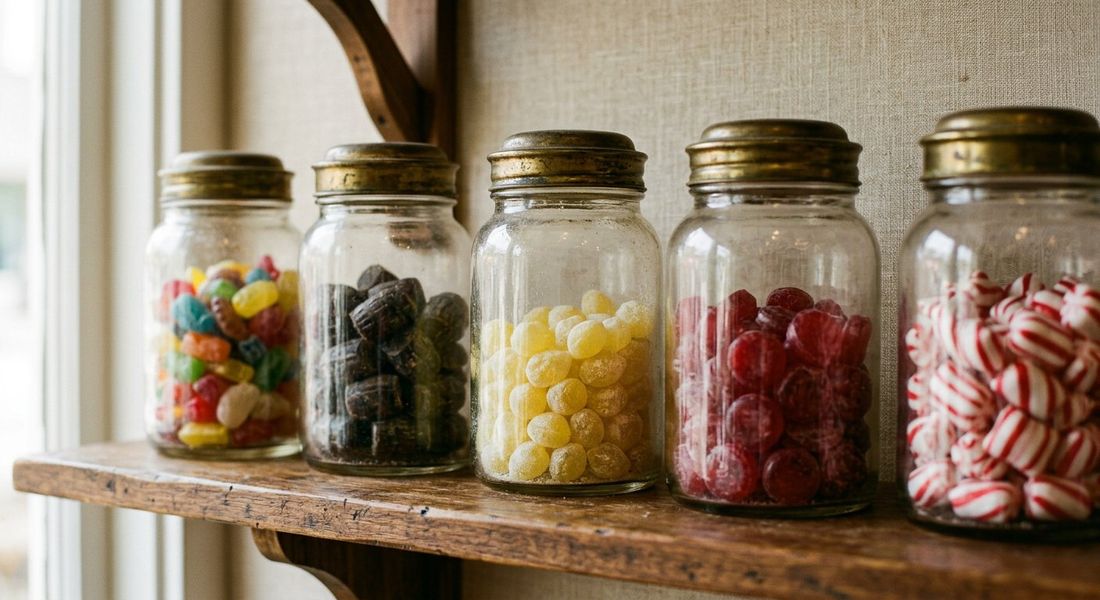
Antique glass apothecary jars filled with old-fashioned hard candies
Plate 03 · Classic hard candy

Apothecary Jar Classics

Root beer barrels, lemon drops, cinnamon disks and clove pillows, pulled from the 1948 ledger and kept in brass-lidded jars along the front counter.

310°F hard crack · Cane sugar · Natural oils

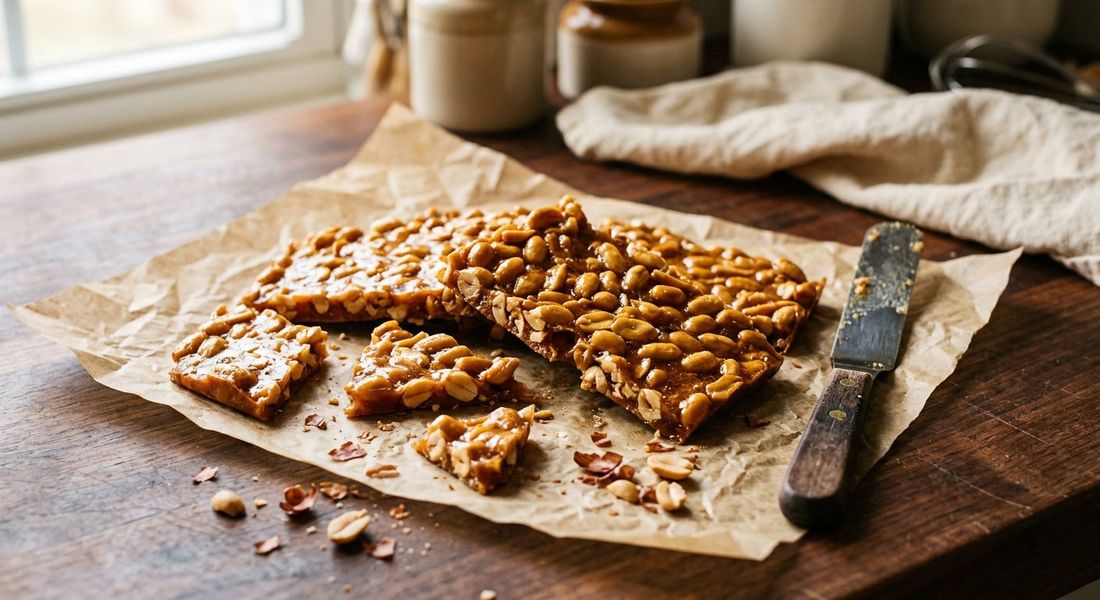
Broken slabs of handmade peanut brittle on parchment with roasted peanuts
Plate 04 · Crunch · Marble slab

Marble-Slab Peanut Brittle

Virginia peanuts folded into a hard-crack caramel, poured thin on cold marble within ninety seconds, then snapped along the fracture lines by hand.

300°F cook · 1/4-inch pour · Hand snapped

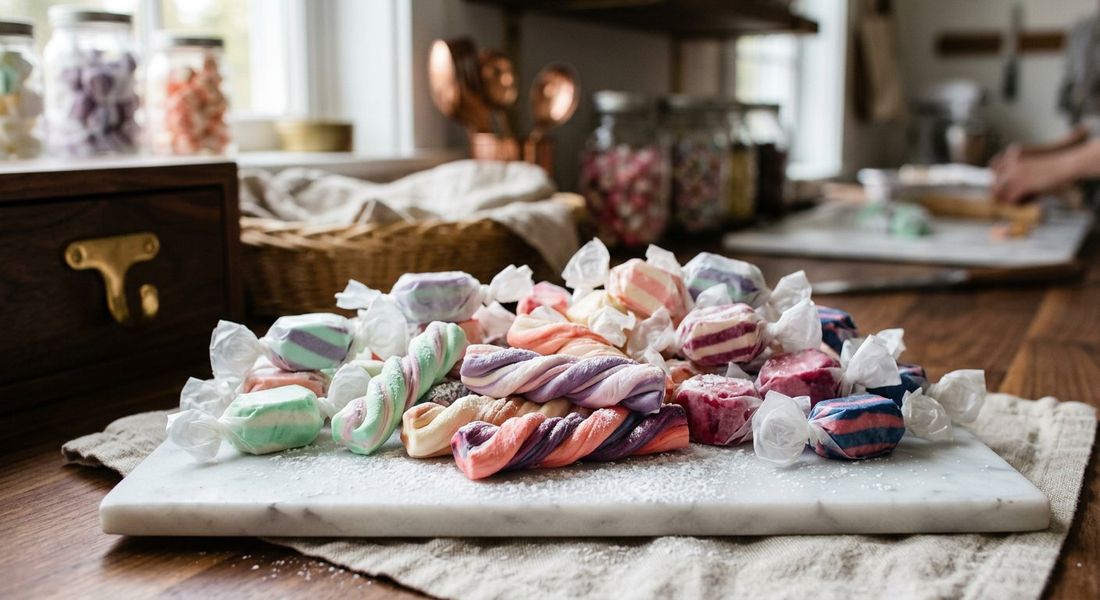
Hand-pulled salt water taffy twists resting on powdered marble
Plate 05 · Chewy · Brass hook

Hand-Pulled Salt Water Taffy

Pulled on a brass hook until the batch turns from dull to glossy, which is the only reliable sign that the air has entered the sugar and the bite will stay soft.

260°F cook · 8-minute pull · Wax twist

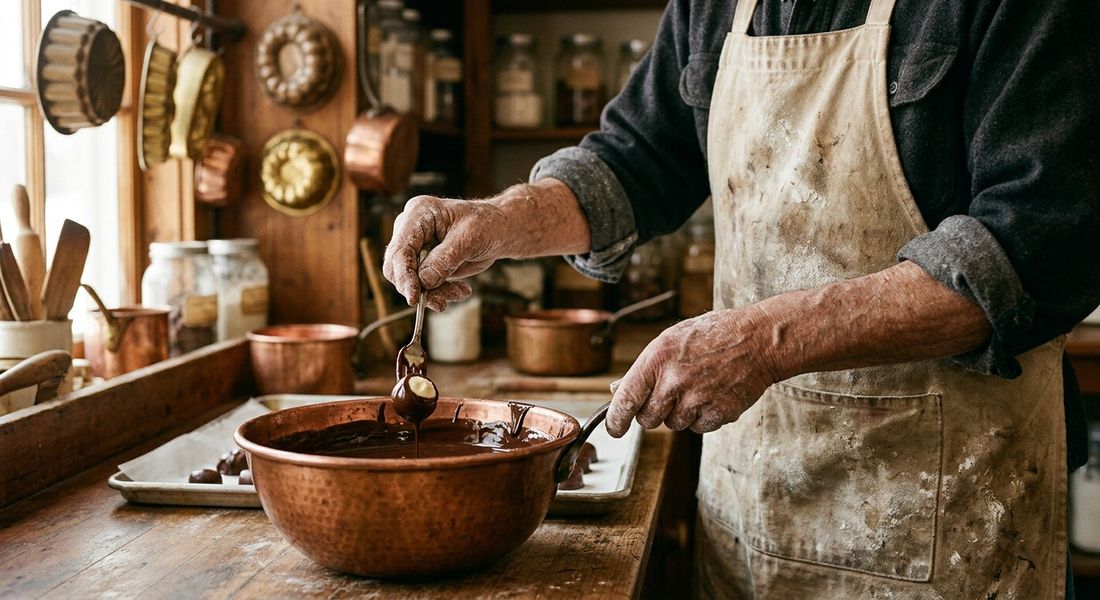
Candymaker dipping vanilla cream centers into dark chocolate by hand
Plate 06 · Chocolate · Hand dipped

Hand-Dipped Chocolate Creams

Vanilla and maple fondant centers, tempered at 88°F and dipped one at a time on a fork so each shell stays thin at the shoulder and thick at the base.

88°F temper · 62% cacao · One-at-a-time dip

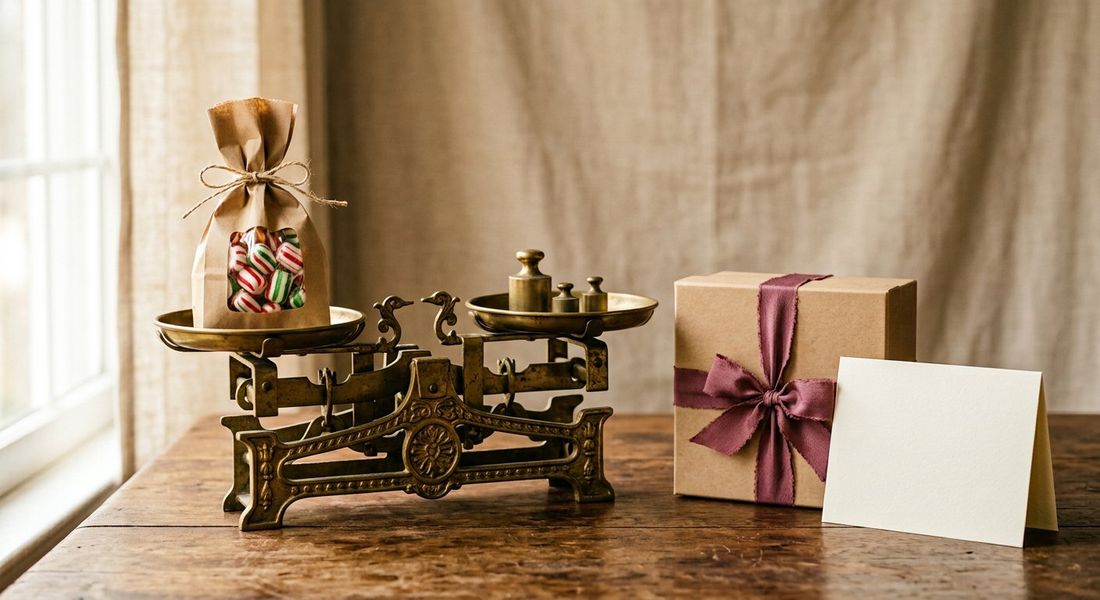
Brass scale weighing a paper twist bag beside a ribbon-tied gift box
Plate 07 · Gift · Ribbon tied

Ribbon-Tied Reserve Boxes

Assortments weighed on the original 1948 brass scale, layered in wax paper and closed with mulberry grosgrain ribbon for anniversaries and holidays.

Brass scale · Wax layers · Grosgrain trim

Six plates · Horizontal rail · Keyboard scroll supported

03 / Preference matcher

Narrow the dossier by the candy you actually reach for

Filter the entry ledger below by family or texture. Choose one filter at a time, then read the cook point, format and placement notes for each surviving entry.

Showing all 6 dossier entries

  • CC-48-CA

    Copper kettle cream caramels

    The reference caramel of the archive: cultured butter, cream and cane sugar cooked to 245°F and cured for two days before cutting.

    Firm ball · Flake salt finish · Twelve-piece walnut tin

  • CC-48-RB

    Root beer barrels & lemon drops

    Small-batch hard candy made with cane sugar and natural root beer and lemon oils, pulled glassy and stamped in brass molds.

    Hard crack · Brass molded · Half-pound paper bag

  • CC-48-PB

    Marble-slab peanut brittle

    Virginia peanuts in a 300°F caramel poured thin on cold marble, snapped by hand into irregular plates with a visible fracture face.

    Hard crack · Hand snapped · Slab in craft board

  • CC-48-TA

    Hand-pulled salt water taffy

    Wintergreen, molasses, butter rum and peppermint twists, pulled on a brass hook and wrapped while still slightly warm.

    Soft chew · Brass hook pull · Wax twist

  • CC-48-CH

    Hand-dipped chocolate creams

    Vanilla, maple and raspberry fondant centers dipped in tempered 62% cacao chocolate, one at a time, on a dipping fork.

    Fondant center · 88°F temper · Cushioned gift box

  • CC-48-MP

    Molasses peppermint sticks

    Striped sticks pulled on the hook and cut long enough to stir a cup of cocoa, a Heartland winter standard since the first batch.

    Hard crack · Hook pulled · Bundle of six

04 / Specification ledger

Two archive standards, compared line for line

The two most requested entries in the dossier, set side by side on the same nine attributes so a buyer can judge texture and shelf behavior before choosing.

Reference CC-48-CA

Cream caramels, Batch 48

Cook point
245°F, firm ball stage
Sugar
Non-GMO American cane sugar with a measured glucose fraction
Dairy
Cultured butter and 36% Ohio cream, added at 230°F
Cure
48 hours on parchment at room temperature
Texture
Firm chew that yields before it sticks; short, not stringy
Finish
Flake salt dust, no coating, no edible print
Format
Twelve-piece walnut tin or half-pound paper bag
Shelf life
Eight weeks wrapped; four weeks once opened
Best for
After-dinner service, anniversary tins, whiskey pairing
Reference CC-48-MP

Molasses peppermint sticks

Cook point
310°F, hard crack stage
Sugar
American cane sugar with first-run barrel molasses
Dairy
None; the gloss comes from the pull, not from butter
Cure
Six hours in a dry room to set the stripe
Texture
Clean, glassy snap with a slow dissolve on the tongue
Finish
Hand-pulled stripe in peppermint oil and beet powder
Format
Bundle of six in a kraft sleeve, or single long stick
Shelf life
Six months dry; keep away from humidity and heat
Best for
Cocoa service, holiday tabletops, long-distance gifting

Both standards are cooked in the same thirty-quart copper kettle and finished by the same two hands. Read the full care and storage protocol on the quality and care guide.

05 / Kettle room process

Six steps between cane sugar and wax paper

A batch moves through the same six stages it did in 1948. The sequencing is fixed; only the thermometer has been replaced.

  1. Weigh and dissolve

    Cane sugar, glucose and water are weighed to the ounce and dissolved slowly at 190°F, because sugar that boils before it dissolves will crystallize in the tin three days later.

  2. Cook in copper

    The kettle takes the batch to its published cook point — 245°F for caramels, 310°F for hard candy — with a brass thermometer clipped to the rim and stirred by hand.

  3. Pour on cold marble

    Nothing is poured into a mold first. The batch hits buttered marble, is folded with a bench scraper, and begins to set from the outside in.

  4. Pull or dip by hand

    Taffy and sticks go to the brass hook; creams go to the dipping fork; brittle goes under the snap. This is the stage no line machine reproduces.

  5. Cure in the dry room

    Candies rest on parchment at controlled humidity so the surface dries without the center drying with it — forty-eight hours for caramels, six for a striped stick.

  6. Wrap in wax paper

    Every piece is wrapped and every box is weighed on the 1948 brass scale, then closed with ribbon. The ledger entry is signed and dated by the batch maker.

06 / Bespoke selection

Build a custom selection from the archive

Assemble a family, a finish, a presentation and a trim. The dossier summary updates as you choose and can be copied for a conversation with the studio.

1. Candy family

Choose the flavor register the selection should lead with.

2. Finish

The last gesture before the candy is wrapped.

3. Presentation

How the batch should arrive on the table.

4. Trim

The ribbon and card that close the package.

Live dossier summary

Your selection

Cedar Creek Confectionery selection — Family: Cream caramels. Finish: Sea salt dust. Presentation: Twelve-piece walnut tin. Trim: Mulberry grosgrain ribbon. Reference code CC-48-CCW

Signed by the batch maker · Ledger entry dated on packing

07 / Buyer ledger

Questions the dossier answers most often

Four questions that arrive by letter and email from buyers comparing handmade artisanal candies against supermarket assortments.

What makes handmade artisanal candies different from factory candy?

Batch size and cooling control. A forty-pound copper batch poured on cold marble forms a shorter sugar crystal than a continuous line, which is why the caramel yields instead of sticking and the hard candy dissolves rather than shatters.

Which childhood flavors appear most often in the archive?

Root beer, wintergreen, clove, cinnamon, lemon, molasses and vanilla, followed by peanut brittle, salt water taffy and hand-dipped vanilla creams — the same register American families bought from drugstore counters in the 1940s and 1950s.

How should caramels and chocolate creams be stored?

Caramels keep wrapped at 60 to 68°F away from sunlight for eight weeks. Chocolate creams hold best at 65°F or cooler to avoid cocoa butter bloom. Skip refrigeration entirely; moisture is the real enemy of both.

Can a selection be built around an occasion or a texture preference?

Yes. Use the preference matcher above to narrow by family, then build the family, finish, presentation and trim in the bespoke selection panel. The summary can be copied and sent to the studio for a documented, signed ledger entry.